
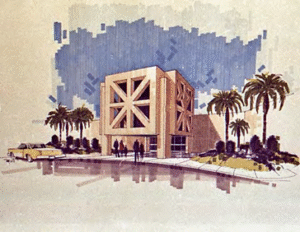
When Paradise Valley Mall opened in 1979, it quickly became part of daily life in northeast Phoenix. People shopped here, worked here, watched movies, attended classes, and gathered with friends and family. For many, the mall wasn’t just a destination. It was woven into routines, memories, and livelihoods.
Images provided by Red Development.
“My mom walked inside PV mall each morning before work for twenty years. It was an inviting climate-controlled space where people of all ages would exercise and connect as a community, often becoming friends.” — Sheri, Senior Division Administrator
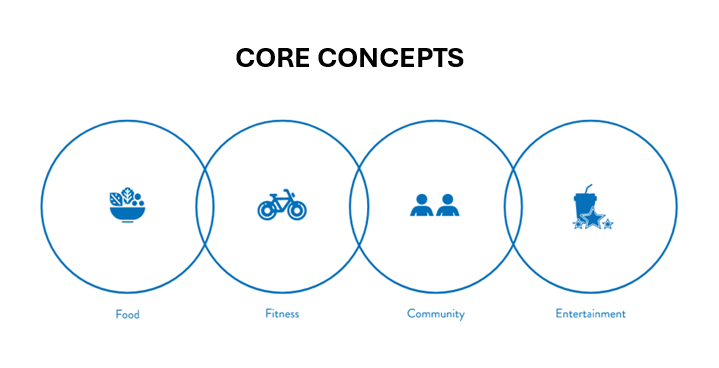
Opened in 1979, Paradise Valley Mall was a product of Westcor’s vision for a suburban retail hub in the rapidly growing northeast Phoenix area. Designed by architect Rafique Islam, the mall reflected the mid-century modern aesthetic of the time. It quickly became a central gathering place, serving as a social and retail anchor for the surrounding community. As retail patterns changed nationwide, the site faced growing challenges. By 2021, demolition planning and redevelopment were formally underway, guided by four core concepts: food, fitness, community, and entertainment.
Images provided by Red Development.
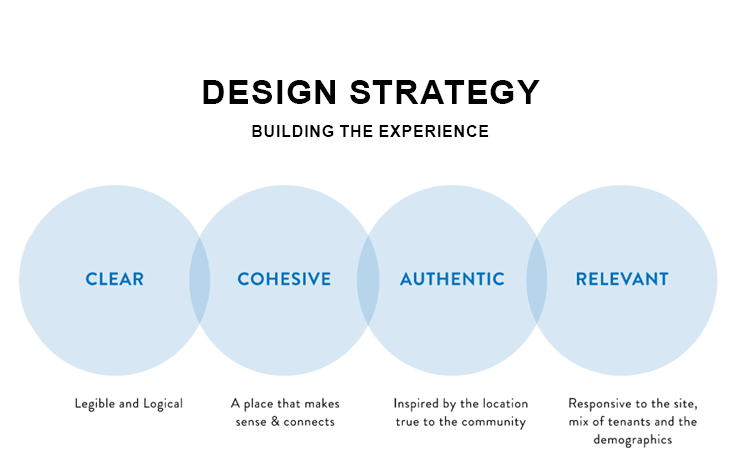
The first major step in bringing that vision to life was the opening of a flagship Whole Foods store, paired with a new multifamily residential community. Together, they anchored the redevelopment, introduced community activity, and brought residents to live and work on site. That combination helped transform the former mall into a place built around walkability and everyday use.
RED Development’s $2 billion investment reshaped the 100-acre site into a connected, mixed-use district. Streets, paths, and open spaces were designed to prioritize pedestrians and cyclists, linking surrounding neighborhoods with retail, housing, and public gathering areas. The relocation of the city transit center to a central location adjacent to the parking garage further strengthened access and made the site easier to navigate for residents, employees, and visitors.
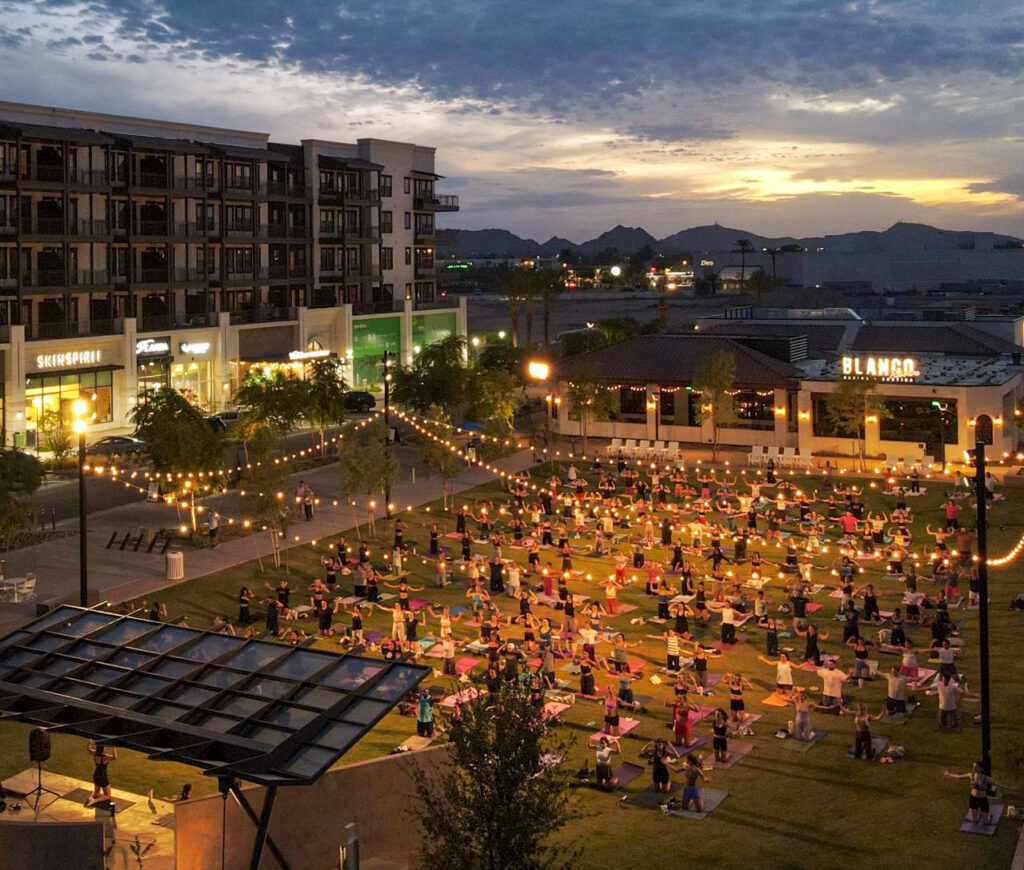
Today, PV is active and social. The central park hosts wellness events, outdoor movies, concerts, and neighborhood gatherings. These shared spaces reflect the project’s goal: creating a place where people don’t just pass through but spend time together.
Images provided by Red Development.
Fender Musical Instruments’ new co-headquarters adds another layer of meaning. For Derek, a Principal at WOODPATEL and Project Manager on the project, Fender’s presence is personal.
“When I learned about the opportunity to help design Fender’s headquarters at the PV Redevelopment, I was super excited! My son (8) and daughter (12) are both into all things music and have had Fender electric guitars for years. When I told my kids I was helping to design their HQ, their reaction made me feel like a rockstar! I can’t wait for the opportunity to take my family to see the Fender HQ building, check out a concert at the PV Redevelopment Park, and maybe even get a chance for them to see the guitar shop in the Fender building lobby!”
“It’s projects like Fender’s HQ that inspire you and your design team to bring true pride in your work by connecting your professional and personal lives. At WOODPATEL, we are continually creating the future of the valley with unique projects like Fender HQ!”
— Derek, Principal & Project Manager
PV doesn’t erase its past. It builds on it. By replacing inward-facing design with connected streets, open spaces, and accessible pathways, the redevelopment turns a once-isolated site into a walkable district where new memories are made every day.
Images provided by Red Development.
Recent Comments